Protea Rose: A Designer’s Review for Real Stitching
When I first loaded the Protea Rose file into my digitizing software, I wasn’t just looking at pixels; I was visualizing the needle hitting fabric. As an experienced designer who has spent years troubleshooting puckering and optimizing thread paths, I approach every new machine embroidery design with a critical eye. This isn’t just about aesthetics; it is about performance. Will it pull? Will it register correctly on textured material? Does it hold up after a wash cycle? The Protea Rose, described as crafted with love by a family of skilled artisans, promises vibrancy, but let’s break down how it actually performs in a real-world workshop environment.
First Impressions: Mood and Visual Personality
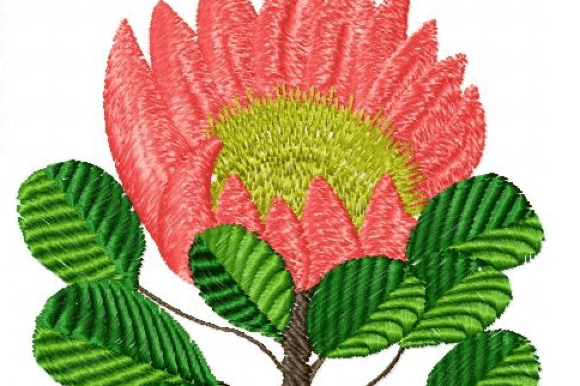
The immediate impression of Protea Rose is one of bold, organic confidence. Unlike delicate, wispy florals that can get lost in the noise of a busy fabric pattern, this design commands attention. It belongs firmly in the Single Flowers category, yet it feels substantial enough to stand alone as a focal point. The layout suggests a balance between intricate detail and open space, which is crucial for maintaining stitching clarity.
The mood it creates is warm and inviting, perfect for projects that need to feel personal and handmade. For an Etsy seller or a boutique owner, this visual personality translates directly to brand consistency. It doesn’t scream "mass-produced"; instead, it whispers "crafted with care." When you are building a small shop product line, having a design that looks intentional and high-quality from a distance is half the battle won.
Real-World Application: The Tote Bag Test
To truly evaluate an embroidery file, you have to imagine it on a specific substrate. Let’s consider a custom canvas tote bag, a staple for any craft business. Canvas is durable but has a distinct weave. If the Protea Rose uses too many fine running stitch details without proper underlay, they might disappear into the texture. However, if the design utilizes robust fill stitch areas effectively, it will pop beautifully against the neutral background.
I envision this design centered on a heavy-duty cotton tote. The vibrant colors mentioned in the description would contrast sharply with natural beige or deep navy fabrics. For a personalized gift or a farmer’s market merchandise item, this level of visibility is essential. Customers engage with what they can see clearly from three feet away. If you are creating a printable mockup for your online store, ensure the digital preview reflects this boldness, perhaps by showing the design on a textured background rather than a flat white void.
Apparel and Wearables
Moving to custom apparel, such as a sweatshirt or a structured cap, the considerations shift. Sweatshirts are thick and plush. A design like Protea Rose needs sufficient density to bridge the gap of the fleece without sinking in. If the digitizer has accounted for this with proper compensation, the result will be a luxurious, raised texture that feels premium to the touch. For sweatshirt embroidery, this tactile quality increases the perceived value of the finished product.
However, caution is needed with stretchy fabrics. If you are applying this to a fitted t-shirt, the hoop tension and stabilizer choice become critical. A dense floral design can cause puckering if the fabric pulls during stitching. Always test on scrap fabric first. Check how the stitch density interacts with the knit. If the design feels stiff after stitching, it may not be suitable for garments that require drape and flexibility.
Navigating Technical Challenges
No design is universal, and Protea Rose is no exception. There are specific scenarios where you should proceed with care. Small hoop sizes, such as 4x4 inches, might crop essential elements of the flower if the design is large. Always confirm the actual dimensions before purchasing or stitching. Additionally, curved surfaces like caps present a challenge for detailed floral work. The distortion inherent in cap embroidery can warp the petals, making them look uneven. If you are doing embroidered patch work, however, this is less of an issue since you can stabilize the patch flat before attaching it.
Dark fabrics require special attention to thread colors. While the design is infused with vibrant hues, ensure there is enough contrast. A bright pink petal on a black shirt works; a muted mauve might vanish. Use proper stabilizer, likely a cut-away for knits or a tear-away for wovens, to support the weight of the stitches. Inspect small details closely. If the center of the Protea relies on tiny satin stitches, verify that your machine can handle that precision without thread breaks.
Commercial Viability and Brand Trust
For commercial embroidery projects, reliability is key. A design that frequently causes thread breaks or registration errors costs you time and money. Protea Rose appears to be designed with longevity in mind. When customers receive a holiday embroidery gift or a wedding present featuring this flower, the cleanliness of the backside matters almost as much as the front. Neat trims and secure lock stitches indicate professionalism.
This design enhances buyer engagement because it feels unique. In a sea of generic clipart-style embroidery, a well-digitized floral piece stands out. It builds customer trust because it looks like it was made by a skilled artisan, not just printed on. Whether you are selling design assets or physical goods, the quality of the underlying file dictates your reputation. Ensure you check the licensing terms. Can you sell finished items? Is it cleared for commercial use? These are non-negotiable questions for any serious digital product seller.
Practical Designer Notes
- Test on Scrap: Never run a new design on final product fabric without a test stitch-out.
- Check Contrast: Review the thread color chart against your intended fabric. Adjust if necessary.
- Stabilizer Selection: Match the stabilizer to the fabric weight. Heavy designs need strong support.
- Hoop Size Verification: Confirm the design fits your smallest common hoop to maximize versatility.
- Black and White Mockup: Convert the design to grayscale in your software to check for value contrast and detail loss.
In conclusion, Protea Rose is a compelling addition to any embroidery project library. It balances artistic flair with practical application, making it suitable for everything from baby embroidery on onesies to sophisticated home decor. By understanding its strengths and respecting its technical requirements, you can leverage this design to create products that resonate with customers and elevate your brand. Remember, the best designs are those that not only look beautiful but also stitch reliably, allowing you to focus on creativity rather than correction.