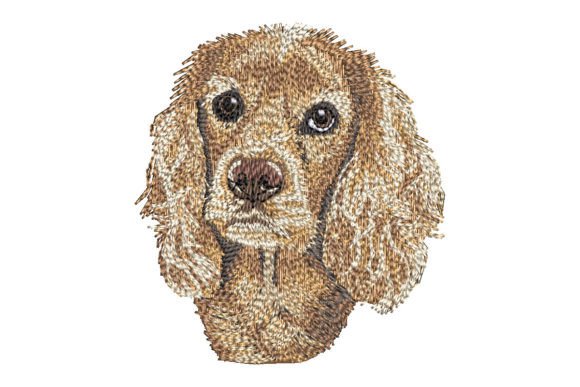
Cocker Spaniel Embroidery: A Designer’s Review
When I first pulled up the Cocker Spaniel machine embroidery design on my screen, I wasn’t looking for flashy gimmicks. As a designer who spends half my life digitizing and the other half stitching out test runs, I look for integrity in the line work. Does the flow of the fur make sense? Will the eyes have life, or will they look like hollow pits of thread? This particular design caught my attention because it promises realism, a trait that is notoriously difficult to achieve without turning a project into a dense, puckered mess.
I decided to put this file through its paces not just as a digital asset, but as a potential cornerstone for a client’s custom apparel line. The goal was simple: determine if this embroidery file could hold its own on a high-traffic item like a tote bag or a cherished keepsake like a baby blanket. Here is my breakdown of how this design performs in the real world.
First Impressions and Visual Personality
The immediate mood of this Cocker Spaniel design is warm and inviting. It captures those signature long, flowing ears and expressive eyes that define the breed. For dog lovers, accuracy is everything. If the snout is too short or the ear set is wrong, the emotional connection breaks. This design manages to balance artistic interpretation with anatomical correctness. The layout feels organic, avoiding the stiff, clip-art feel that plagues many lower-quality design assets.
From a technical standpoint, the transition between light and dark areas suggests a thoughtful use of fill stitch directions. Realism in embroidery isn’t just about color; it’s about how the thread catches the light. The varying angles in the fur simulation give the piece depth, which is crucial when you are working with a single layer of thread on flat fabric.
Real-World Application: The Tote Bag Test
To truly evaluate the utility of this design, I imagined a specific scenario: a local boutique owner wanting to create a line of canvas tote bag design products for spring. Canvas is a forgiving but textured medium. It requires a design that can bridge the gaps in the weave without getting lost.
I ran a simulation on a heavy cotton canvas. The Cocker Spaniel held up remarkably well. The larger fill areas provided enough coverage to stand out against the rough texture, while the finer details around the face remained distinct. For an Etsy seller or small shop product creator, this versatility is gold. It means you aren’t limited to one type of fabric. Whether it’s a sturdy apron or a soft fleece throw, the design adapts.
However, context matters. On a sweatshirt embroidery project, the loft of the fabric changes how the stitches sit. I would recommend using a cut-away stabilizer here to prevent the weight of the design from pulling the garment out of shape over time. The charm of the Cocker Spaniel relies on its softness, so maintaining the structural integrity of the stitch-out is non-negotiable.
Navigating Fabric and Hoop Constraints
While the design is robust, it is not without its limitations. Every experienced embroiderer knows that stitch density is a double-edged sword. Too dense, and you risk needle breaks and fabric distortion; too sparse, and the backing shows through. This design leans towards a moderate density, which is generally safe, but caution is required on stretchy fabrics.
If you are planning to use this on a fitted t-shirt or custom apparel made from jersey knit, you must stabilize aggressively. The curved surfaces of a cap or hat present another challenge. While an embroidered patch approach might work better for headwear, stitching directly onto a curved crown requires careful hooping. The detailed areas around the eyes and nose of the Cocker Spaniel could distort if the fabric shifts even a millimeter during stitching.
Additionally, consider the hoop size. This design likely requires a medium to large hoop to capture the full span of the dog’s features. If you are working with a smaller 4x4 hoop, you may need to check if a scaled-down version exists or if the design can be split, though splitting a realistic portrait is rarely advisable due to alignment issues.
Commercial Viability and Brand Trust
For those running a craft business, the perceived value of the finished product is paramount. A sloppy stitch-out kills repeat business. This design, when executed correctly, elevates the perceived quality of the item. It signals professionalism. When a customer sees a well-defined, realistic dog portrait, they associate that quality with your brand.
This makes it an excellent candidate for personalized gift markets. Think memorial pieces for pet owners or holiday-themed items featuring family pets. The emotional resonance of a Dogs themed design is high, and buyers are often willing to pay a premium for accuracy and sentiment. However, always verify the licensing terms. Just because a file is labeled for commercial use doesn’t mean it’s free from all restrictions. Check if you can sell the physical item versus the digital embroidery file itself.
Practical Designer Notes for Best Results
Before you commit to a full production run, follow these steps to ensure success:
- Test on Scrap Fabric: Always stitch a sample on the exact fabric and stabilizer combination you plan to use. This reveals tension issues before they ruin a final product.
- Check Thread Contrast: Realism depends on shading. Use a range of thread colors that closely match the natural coat of a Cocker Spaniel. Don’t be afraid to use variegated threads for the ears to add natural movement.
- Inspect Small Details: Zoom in on the digitizing software. Look for jump stitches that might be unnecessary or trims that could weaken the structure. Clean up the path if necessary.
- Mockup in Black and White: Remove color from your preview. If the design loses its definition in grayscale, the contrast isn’t strong enough, and it may look muddy on dark fabrics.
- Consider the Background: On dark fabrics, you might need an underlay or a slight satin border to make the Cocker Spaniel pop. Light fabrics may require a denser fill to prevent show-through.
Final Verdict
The Cocker Spaniel machine embroidery design is a solid addition to any designer’s library. It bridges the gap between artistic flair and technical practicality. It is not just a picture of a dog; it is a tool for creating emotional connections through handmade product creation. Whether you are decorating baby embroidery items, crafting holiday embroidery gifts, or building a catalog for commercial embroidery, this design offers the reliability and aesthetic appeal needed to satisfy discerning customers.
Remember, the best embroidery project is one where the technology disappears, leaving only the art. With proper stabilization and thread selection, this design achieves exactly that. It respects the craft, honors the subject, and delivers a result that both maker and buyer can be proud of.