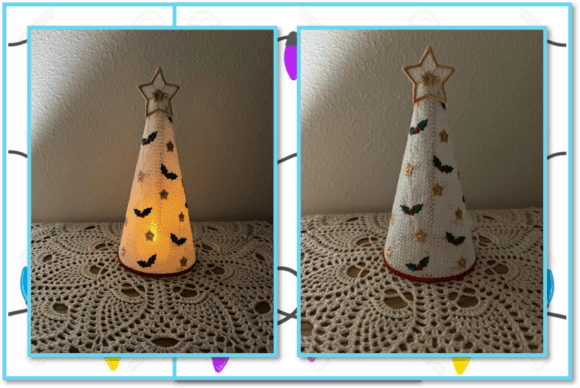
Holly Tree-FSL: A Designer’s Review of 3D Lace Holiday Embroidery
As an embroidery designer who has spent countless hours digitizing and testing files for commercial use, I approach every new machine embroidery design with a critical eye. It is not just about whether the image looks pretty on a screen; it is about how the thread behaves on fabric, how the stabilizer holds up under tension, and ultimately, how the finished product feels in a customer’s hands. Recently, I evaluated Holly Tree-FSL, a Free-Standing Lace (FSL) design intended to create three-dimensional Christmas trees. This review breaks down its practical application for crafters, Etsy sellers, and boutique owners looking to elevate their holiday offerings.
First Impressions: Structure and Visual Mood
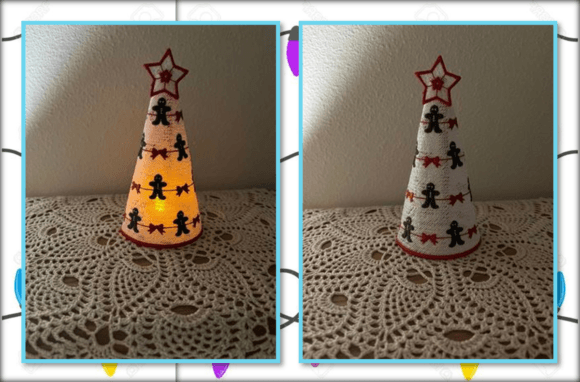
The immediate appeal of Holly Tree-FSL lies in its architectural integrity. FSL designs are notoriously tricky because they lack a fabric base to support the stitches. The structure must be self-supporting. Upon inspecting the digitizing, I noticed a thoughtful balance between open spaces and dense connection points. The design does not rely solely on heavy fill stitch areas, which can make lace stiff and brittle. Instead, it utilizes a network of running stitch frameworks that allow the tree to maintain a delicate, airy appearance while remaining sturdy enough to stand upright.
The mood is distinctly festive yet sophisticated. Unlike cartoonish holiday motifs, this design offers a refined aesthetic suitable for high-end home decor or boutique gifts. The silhouette suggests a traditional evergreen, but the lace texture adds a layer of elegance that flat embroidery cannot achieve. For designers, this means the visual personality fits well within modern minimalist decor trends as well as traditional holiday settings.
Real-World Application: From Mockup to Market
To truly understand the value of an embroidery file, you must visualize it in a real project scenario. I imagined using Holly Tree-FSL not just as a standalone ornament, but as part of a curated gift set. Picture a custom embroidered tote bag where these lace trees are attached as dimensional embellishments near the handle. The contrast between the sturdy canvas of the bag and the intricate, fragile lace creates a tactile experience that increases perceived value.
For Etsy sellers and small shop owners, versatility is key. These lace trees can serve as unique gift tags, replacing paper cards with a keepsake item. They can be glued onto pillow covers for a textured holiday accent or used as toppers for wrapped presents. In the context of commercial embroidery, this design allows for product differentiation. While many competitors offer standard flat holiday embroidery on sweatshirts or aprons, offering a mixed-media product that incorporates 3D lace elements sets a brand apart. It signals attention to detail and craftsmanship.
However, the application requires care. If you are creating custom apparel, such as a sweatshirt with a lace pocket detail, ensure the lace is securely tacked down with additional stitching or fabric adhesive designed for textiles. The goal is to enhance the garment without compromising its wearability.
Technical Considerations and Fabric Compatibility
Working with FSL demands precision. The success of Holly Tree-FSL depends heavily on your choice of stabilizer. Water-soluble stabilizer is the standard, but the weight matters. For a design of this complexity, a medium-weight water-soluble film is often ideal. It provides enough support during stitching to prevent thread breakage but dissolves cleanly to leave no residue. Always test the design on scrap fabric or a spare piece of stabilizer before committing to your final material.
Thread selection also plays a crucial role. High-sheen rayon or polyester threads highlight the lace structure beautifully. When choosing thread colors, consider the background against which the tree will be displayed. Traditional reds and greens work well, but metallic gold or silver threads can transform the piece into a luxury decor item. Be mindful of stitch density; if the density is too high for your machine’s tension settings, the lace may pucker or tear when removed from the hoop.
There are limitations to consider. This design is not suitable for stretchy fabrics or thin, delicate materials unless it is fully enclosed in a stabilizer-backed patch. Curved surfaces like caps present a challenge for FSL applications because the rigid nature of dried lace does not conform well to curvature. Therefore, Holly Tree-FSL is best reserved for flat or slightly structured items like tote bags, wall hangings, or rigid ornaments.
Enhancing Brand Value and Customer Trust
For creative entrepreneurs, the presentation of the handmade product is as important as the item itself. Using high-quality designs like Holly Tree-FSL contributes to brand consistency. When customers receive a gift that features intricate, well-executed lace, it builds trust in your craftsmanship. It suggests that you do not cut corners.
In digital marketing, these pieces photograph exceptionally well. The shadows cast by the 3D structure add depth to printable mockup images and social media posts. This visual appeal drives buyer engagement. However, transparency is vital. Clearly communicate care instructions to your customers. Lace items should generally be hand-washed or spot-cleaned to preserve their shape. Providing this guidance upfront reduces return rates and enhances customer satisfaction.
Practical Designer Notes for Implementation
Before integrating Holly Tree-FSL into your production line, follow these practical steps:
- Test on Scrap Material: Always run a test stitch-out to check for thread breaks or tension issues.
- Check Hoop Size: Confirm that your machine’s hoop can accommodate the design dimensions without re-hooping, which can misalign FSL patterns.
- Review Stitch Density: Inspect the file in your embroidery software. Look for overly dense areas that might cause bulkiness.
- Contrast Testing: View the design in black and white within your software to ensure the structural lines are clear and distinct.
- Licensing Verification: If you plan to sell finished items or use the design in commercial products, verify the license terms provided with the digital embroidery file. Ensure you have the right to use it for craft business purposes.
- Clean Finish: After dissolving the stabilizer, allow the lace to dry completely on a flat surface to prevent warping.
In conclusion, Holly Tree-FSL is a robust choice for designers seeking to add dimension to their holiday collections. It bridges the gap between traditional embroidery and sculptural art. By understanding its technical requirements and leveraging its aesthetic strengths, you can create memorable personalized gifts and standout small shop products that resonate with customers long after the holiday season ends.