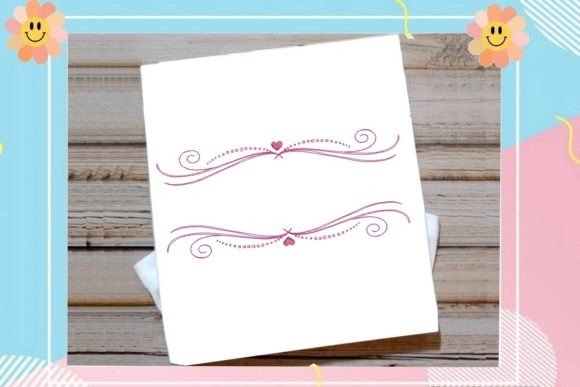
Reviewing the Elegant One-Line Heart Frame for Real Projects
As a designer who spends more time staring at stitch previews than I care to admit, I have developed a keen eye for what works on fabric versus what only looks good on a screen. When I first loaded the Elegant One-Line Heart Frame into my digitizing software, my initial reaction was one of cautious optimism. Minimalist designs are notoriously difficult to pull off in machine embroidery because they leave no room for error. Every jump, every tension fluctuation, and every slight misalignment becomes visible when there is no dense fill stitch to hide behind.
This design falls under the category of Borders, but it functions more as a delicate accent than a traditional boundary. The concept is simple: a heart-shaped outline created with a continuous, flowing line that suggests sophistication without heaviness. For those of us running small shops or creating personalized gifts, this kind of versatility is gold. But does it hold up under the needle? Let’s break down how this machine embroidery design performs in real-world scenarios.
First Impressions and Visual Mood
The immediate appeal of the Elegant One-Line Heart Frame is its airy quality. Unlike heavy satin stitch borders that can stiffen fabric, this design relies on negative space. It feels romantic yet modern, making it suitable for a wide demographic. I tested it mentally against several project types before even threading the machine. Would it look childish on a baby item? No, the line work is too refined. Would it look too severe on a wedding gift? Not at all, provided the thread choice is soft.
The "one-line" aesthetic creates a sense of movement. It draws the eye around the perimeter of whatever you place inside it. This makes it an ideal candidate for framing monograms, dates, or short phrases. However, because it is a frame, the interior space is critical. If you plan to use this as an applique design base, ensure your inner elements do not crowd the border. The charm lies in the breathing room.
Real-World Application: The Tote Bag Test
To evaluate practicality, I imagined using this design on a canvas tote bag for a boutique client. Canvas is textured and thick, which can be tricky for fine lines. In this scenario, the Elegant One-Line Heart Frame shines if executed correctly. I would recommend using a slightly heavier thread weight, such as 40wt polyester, to ensure the line remains visible against the coarse weave of the canvas.
For a tote bag design, placement is key. Centered on the front panel, it frames a shop logo beautifully. On the side pocket, it could frame a customer’s initials. The simplicity means it stitches out quickly, which is vital for production runs. A fast-stitching embroidery file reduces wear on your needles and saves electricity, directly impacting your profit margin as an Etsy seller or craft business owner.
Fabric Considerations and Stabilizer Choice
Not all fabrics treat this design equally. On smooth cotton or linen, the result is crisp and professional. However, on stretchy knits like those used for sweatshirt embroidery or custom apparel, caution is required. A continuous line on a stretchy surface can distort if the stabilizer is insufficient. I strongly advise using a cut-away stabilizer for garments that will be washed frequently. This ensures the stitch density—which is low by nature—does not cause the fabric to pucker around the heart shape.
When working with dark fabrics, thread color contrast becomes your most important tool. A white or metallic thread on navy blue creates a striking, high-end look. Conversely, using a similar tone, like grey on black, might render the design invisible from a distance. Always test your thread colors on scrap fabric before committing to the final finished product.
Commercial Viability and Brand Consistency
For commercial embroidery projects, consistency is everything. This design offers a clean, recognizable signature style. If you are building a brand around minimalist, handmade aesthetics, the Elegant One-Line Heart Frame fits seamlessly. It works well for holiday embroidery projects, such as ornament tags or gift labels, where subtlety is preferred over flashiness.
However, be mindful of scale. If you shrink this design too much for tiny items like baby embroidery on onesies, the single line may break or look fragmented. Check your machine’s minimum stitch length capabilities. If the design requires stitches shorter than your machine can reliably produce, it will fail. Always review the technical specifications of the digital embroidery file before purchase or use.
Practical Designer Notes
Before you launch this into your next embroidery project, consider these practical steps:
- Test on Scraps: Never skip this step. Stitch the design on the exact fabric and stabilizer combination you plan to use for the final item.
- Check Hoop Size: Ensure the frame fits comfortably within your hoop with adequate margin for clamping. Crowding the hoop edges leads to distortion.
- Inspect Corners: Even in a curved heart shape, check how the machine handles direction changes. Look for bird nests or loose threads in the preview or test run.
- Verify Licensing: If you are selling small shop products or personalized gifts, confirm that the license allows for commercial use of finished items. Most designers allow this, but always read the terms.
- Mockup Testing: Create printable mockup images to see how the design looks in black and white. If it loses definition in grayscale, it may lack impact on certain backgrounds.
Final Verdict
The Elegant One-Line Heart Frame is a thoughtful addition to any designer’s library. It is not just a decorative element; it is a functional tool for framing content with grace. It performs best when treated with respect for its simplicity. Do not overload it with complex inner designs, and do not underestimate the need for proper stabilization on difficult fabrics.
For handmade product creators, this design offers a quick win. It adds perceived value through elegance rather than volume. Whether you are decorating pillow covers, creating embroidered patches, or enhancing kitchen towels, this border provides a professional finish that customers appreciate. It bridges the gap between hobbyist charm and boutique professionalism, making it a reliable asset for your creative toolkit.